Metagenomics, and the blurring of Species... - Dr Marshall's Perspective - DR MARSHALL'S PERSPECTIVE - THE MARSHALL PROTOCOL:
"The American Society for Microbiology has released a new (FREE) document
'Reconciling Microbial Systematics and Genomics,' March 2007
which explains in detail how pathogens engage in lateral transfer of DNA (and other miscellany) to morph into species which can no longer be readily regarded as distinct. Another older document from the same source is
'Microbial Triggers of Chronic Human Illness,' April 2005
Which we have seen before, but is worth review now. Especially the summary of 'problems' starting on page 9. Enjoy!
ps: I totally agree with this passage:
The criteria used to ascribe etiology to non-microbial causes like genetics and non-infectious environmental influences are far less rigorous than those applied to identify microbial causes. For example, the autism community has all but concluded that autism is a genetic disease, but the dizygotic twin and sibling concordance studies do not support a dominant role for genetic cause. These potential etiologies need to be held to the same experimental standards for causation as microbial etiologies."
Showing posts with label Medicine. Show all posts
Showing posts with label Medicine. Show all posts
Thursday, April 5, 2007
Monday, March 26, 2007
The Science Creative Quarterly » CATIONIC PEPTIDES: A NEW HOPE
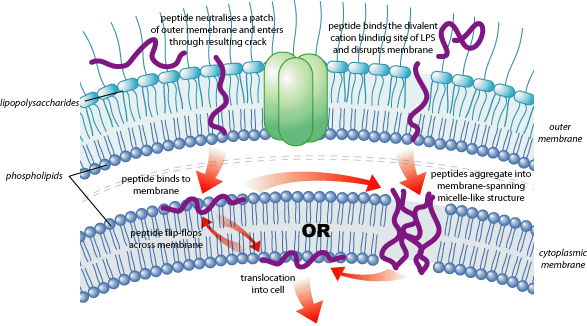
The Science Creative Quarterly » CATIONIC PEPTIDES: A NEW HOPE: "CATIONIC PEPTIDES: A NEW HOPE
By Sara Wilcox"
By Sara Wilcox"


Peptide Promise
Video from The Leading Edge
Inimex Product Candidate is First Immune Defense Regulator to Cure Infections Without Causing Harmful Inflammation.
Info on cationic antimicrobial peptides from R.E.W. Hancock labs.
Inimex Product Candidate is First Immune Defense Regulator to Cure Infections Without Causing Harmful Inflammation.
Info on cationic antimicrobial peptides from R.E.W. Hancock labs.
Tuesday, March 20, 2007
Dr. Andrew Wright
"DR. ANDREW WRIGHT - THE TERRIBLE TRIO "
ADP/ATP conversion test...........how fatigued do you feel?
Not the best looking article, however it is what it is.
ADP/ATP conversion test...........how fatigued do you feel?
Not the best looking article, however it is what it is.
Thursday, March 1, 2007
Cell Wall Deficient Forms: Stealth Pathogens,... - Google Book Search
This is a very nice text book on the subject of staining techniques used to identify cell wall deficient pathogens. Heavy read, but it lets you know as to the extent inflammatory process lead to chronic disease and cancer forms.
Cell Wall Deficient Forms: Stealth Pathogens,... - Google Book Search: "Numerous infectious diseases are currently described as idiopathic, meaning that 'the cause is a complete mystery.' For many idiopathic diseases, the causes become clear when certain techniques are applied to the patient's blood or other tissues. Cell Wall Deficient Forms: Stealth Pathogens, Third Edition describes these techniques."
Cell Wall Deficient Forms: Stealth Pathogens,... - Google Book Search: "Numerous infectious diseases are currently described as idiopathic, meaning that 'the cause is a complete mystery.' For many idiopathic diseases, the causes become clear when certain techniques are applied to the patient's blood or other tissues. Cell Wall Deficient Forms: Stealth Pathogens, Third Edition describes these techniques."
Dr. Brett Finlay
I'm intrigued with Dr. Finlay's research. Innate immunity is the key to recovery from chronic disease. He focuses on intracellular pathogens including Salmonella and E.coli bacteria and innate immunity.
Finlay at the University of British Colombia
Website
These are some of my favorite "free" publications:
Crossing the Line: Selection and Evolution
of Virulence Traits
PHAGOCYTE SABOTAGE: DISRUPTION
OF MACROPHAGE SIGNALLING BY
BACTERIAL PATHOGENS (apparently incomplete description)
Evidence of a Large Novel Gene Pool
Associated with Prokaryotic Genomic Islands
The European Micro Biology Laboratory (EMBL) and molecular machines

I very much like the works of the Frangakis Group. I've come across the website for The Structural and Computational Biology Unit at EMBL. "The Structural and Computational Biology Unit pursues a few common large projects, such as trying to obtain a cell at molecular resolution, that require the input of the different skill sets in the Unit. At the same time it advances science in the different science disciplines it unites." Electron microscopy has come a long way over the past 20 years. The ability to integrate mulitple means of detection into one image is a powerful tool. Hopefully one day these guys will look at cell wall deficient forms and the like.
This work correlates to 'Technologies for the characterization and imaging of molecular machines' objective set out by the DOE Genomics: GTL departement. Being an engineer, I love machines and visualizing them.
Role of L-Forms of Nocardia caviae in the Development...
Role of L-Forms of Nocardia caviae in the Development of Chronic Mycetomas in Normal and mmunodeficient Murine Models.
Some interesting pictures. There are a couple of nasties too.
Some interesting pictures. There are a couple of nasties too.
Mycoplasma-like Organisms and Opthalmic Disease
Part of the Wirostko studies in the late 1980's. Unfortunately, I don't have any publication subscriptions and don't have access to many pictures.
Mycoplasma-like Organisms and Opthalmic Disease
I have linked to another photo here. There are others including Lida Mattman who understand the difficult-to-cultrure-and-isolate pleomorphic forms. Reminds me of quantum mechanics not being able to pin-point a specific quantity without interfering and consequently altering the outcome.
Mycoplasma-like Organisms and Opthalmic Disease

Part of the Wirostko studies in the late 1980's. Unfortunately, I don't have any publication subscriptions and don't have access to more electron microscope pictures.
This paper below has some interesting pictures and notes.
Mycoplasma-like Organisms and Opthalmic Disease
Mycoplasma-like Organisms and Opthalmic Disease
CWD bacteria (picture from above).
Subscribe to:
Posts (Atom)


